|
Album Review
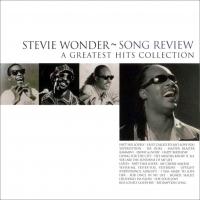
Thirty or so of Stevie Wonder's biggest hits --many of them enduring classics-- make up this double disc. That's the good news.
The bad news is that they're sequenced here about as well (or maybe not) as your CD player's "random" function might do it. Leading off with "Part-Time Lover"--a major chart record, no doubt, but hardly the rouser you'd expect for an opener--is puzzling enough. It's when the programming starts veering from highlights of his self-produced period ("Sir Duke") to Motown assembly-line pieces ("My Cherie Amour") that the head-scratching really begins.
And don't try to count the great moments that are missing. This will do in a pinch, but if you own no Stevie, be advised that better overviews of Wonder's career (the finest by far being the four-CD box At the Close of a Century) are available.
--Rickey Wright
NOTE
In 1961, discovered by Ronnie White of the Miracles, he was signed by Berry Gordy of Motown Records. His voice broke in 1964 but he re-emerged in 1965 with a worldwide hit, 'Uptight (Everything's Alright)'.
His contract expired in 1971 and Wonder financed two experimental albums, playing almost all instruments. He pioneered the synthesizer's use in black music, and addressed racial and spiritual questions. Where I'm Coming From and Music Of My Mind put him at the forefront of black music.
Talking Book (1972) provided hits with 'Superstition' and 'You Are The Sunshine Of My Life'. Innervisions (1973) consolidated his success while Talking Book gave the hits, 'Living For The City' and 'Higher Ground'. Songs In The Key Of Life (1976), perhaps his most ambitious album, displayed musical virtuosity.
The highly successful Hotter Than July (1980) included a tribute to Dr. Martin Luther King, 'Happy Birthday', and a study in reggae, 'Masterblaster (Jamming)'. After Stevie Wonder's Original Musiquarium I (1982), Wonder composed The Woman In Red (1984). It included his biggest-selling single, 'I Just Called To Say I Love You'.
In Square Circle (1985) and Characters (1987) returned to accessible melody. Wonder's image as a statesman of black music, and champion of black rights, was boosted by his successful campaign in the 80s to mark the birthday of Dr. Martin Luther King with a national holiday.
--Daniel Levitin
|
|